
Tethered Drones vs Cell on Wheels:
A Detailed Comparison
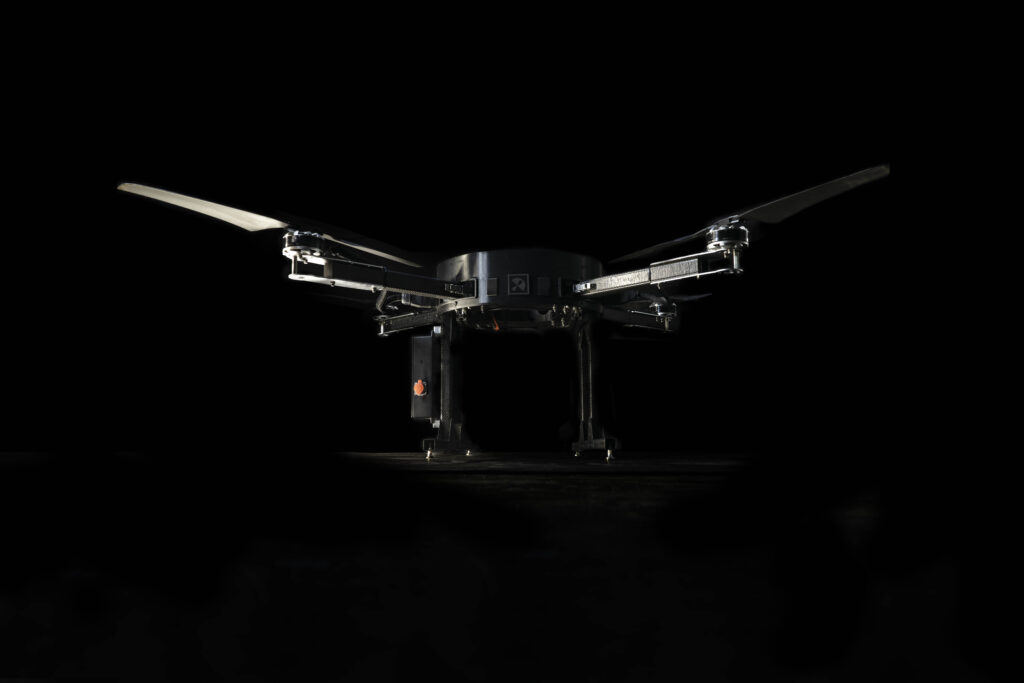
Tethered Drones
Light and mobile aerial systems. Deployed in minutes, adaptive, and efficient. Built for fast, flexible communication anywhere.
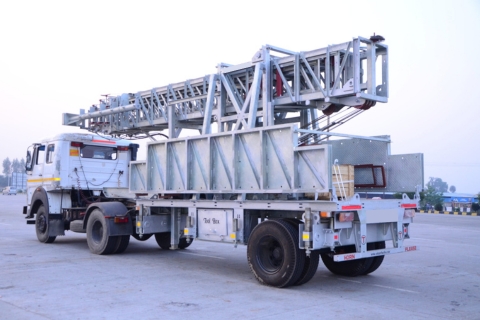
Cell on Wheels
A mobile, self-contained cellular network transported on a truck or trailer, deployed in areas with limited or no existing coverage.
Cell on Wheels (COW)
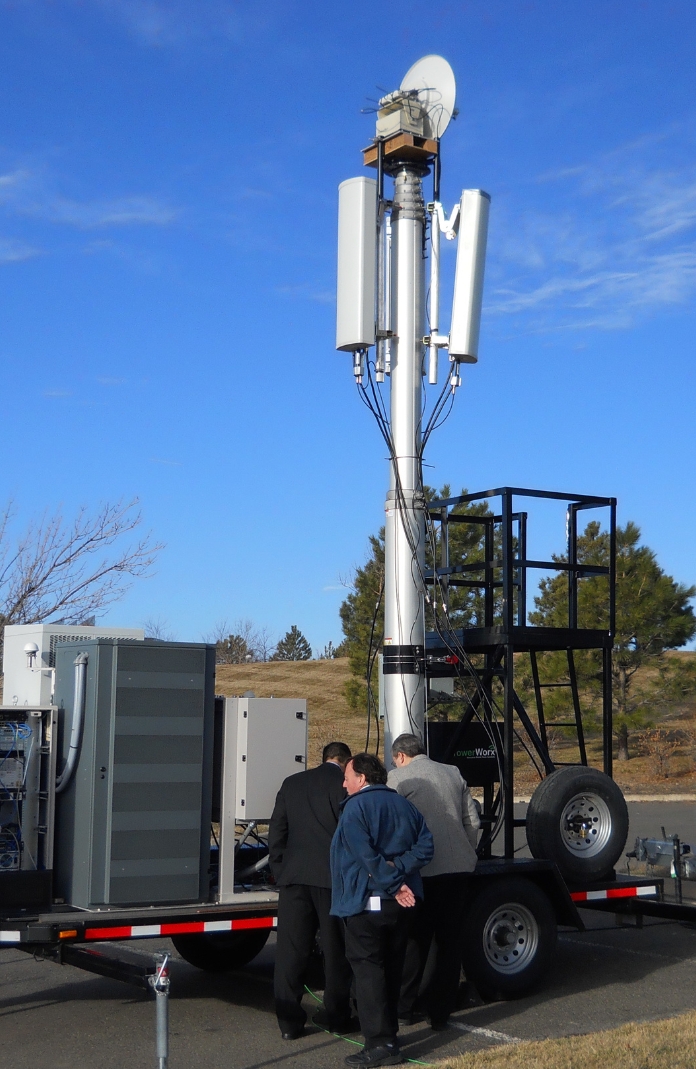
A Cell on Wheels (COW) is a temporary mobile tower mounted on a trailer or truck. It carries antennas, power systems, and communication modules that connect back to the main network through satellite, fiber, or microwave links. These units are widely used by telecom operators and emergency response teams. They have proven their reliability for decades but they also come with physical and operational limits.
COWs require logistics. They need transport vehicles, trained technicians, fuel, and often a flat area for installation. Set up can take several hours, even days. Once raised, the tower stays fixed. If the situation changes, or the crisis moves, the tower cannot follow.
COWs are excellent for planned operations, music festivals, or semi-permanent missions, but less so for dynamic environments.
A mobile tower generally reaches 20 to 30 meters in height. That’s enough to cover a few kilometers in open terrain, but can mean limited coverage in urban areas or mountainous regions.
Since the structure is static, coverage remains fixed. It cannot adjust to changes in user density or terrain. COWs are dependable for stable but localized coverage. However, they can prove to be inadequate in rapidly evolving situations.
Most COWs run on diesel generators or external ower sources. That means fuel deliveries, periodic maintenance and a higher operational footprint. These costs can accumulate quickly.
COWs remain a robust but heavy solution, reliable, but slow and costly to move.
Tethered Drones
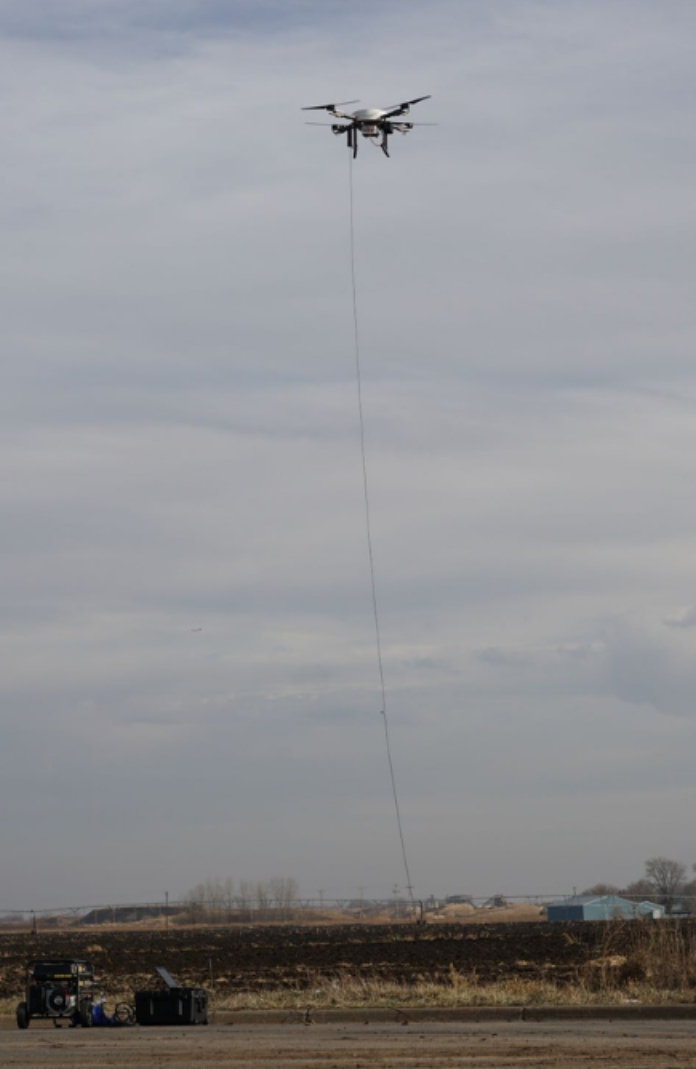
A tethered drone redefines what mobile coverage means. Instead of lifting antennas with a crane, it flies them into position, powered by a thin tether that is connected to the ground control system.
The Superfly tether system can be launched from a compact case that is portable and fits in the back of a car. In less than 10 minutes it is airborne and ready to broadcast. No cranes, no trucks, no permits for heavy equipment.
The platform can rise to 100 – 120 meters, creating wide coverage instantly, even in areas with limited-to-no-access to roads. It is designed for field operations, military communications, large events and emergency response.
A tethered drone can reposition itself in real time to follow people or vehicles. The altitude adjusts automatically for optimal signal quality. Instead of a static tower the system moves and connects where users are.
That flexibility makes tethered drones ideal for volatile environments like refugee camps, disaster hit areas, rescue missions, outdoor festivals where coverage needs to evolve hour by hour.
Powered directly from the ground, the drone can fly for hours, even days. The tether carries both energy and high-speed data, ensuring a stable connection.
Energy use is minimal compared to a large tower. When the generator reaches the end of its cycle, it can be refueled or replaced without interrupting the service.
It’s continuous coverage without the heavy infrastructure.
The Vision Behind Spooky Action
In his TEDx talk, Rahul Tiwari described the future of communication as “Infrastructure designed to move as fast as our needs evolve”. That’s the essence of Spooky Action’s technology turning mobility, autonomy, and intelligence into a new kind of airborne network.
Instead of waiting for towers to be built, we deploy them in the sky wherever and whenever mobile connectivity is needed. Spooky Action doesn’t replace infrastructure — it redefines how fast we can bring it to life. Towers built communication for the 20th century. Tethered systems are building it for the 21st century.
Power from the ground. Coverage in the air. Connectivity without limits.